
Celebrate the gold rush (and Johnny Cash)

The California gold rush was one of the most exciting times in U.S. history, defined by prospectors, outlaws, and enterprising madams who journeyed to towns like Placerville, Folsom, and Sacramento with dreams of striking it rich.
Today, this history is preserved throughout California. On this California Gold Country road trip, you’ll explore towns in Sacramento and El Dorado counties, stopping at museums, pop culture landmarks, and wineries, before ending in South Lake Tahoe.
Note: Although you can start and stop anywhere, budget at least two days to explore each town.
Rancho Cordova and Sacramento
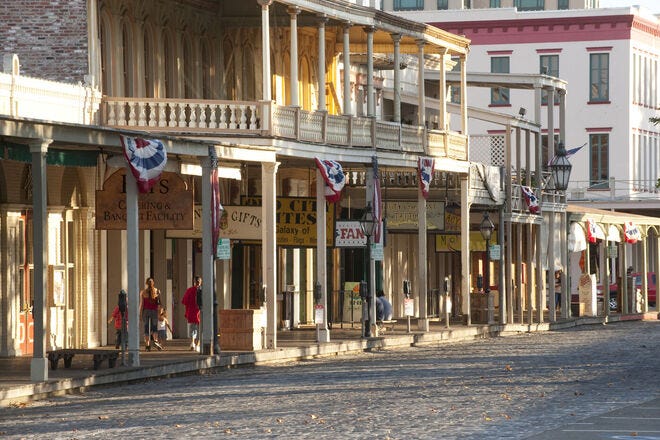
Start your California Gold Country tour in Rancho Cordova. During the gold rush, the town was a significant supply stop between Sacramento and Folsom. It remains the ideal place to gear up for a road trip since there are dozens of shops, restaurants, and hotels in Rancho Cordova. (Most Rancho Cordova hotels are chains, so keep those loyalty numbers handy.) While you’re here, check out the city’s vibrant beer, wine, spirits, and mead scene in the Barrel District of Rancho Cordova.
A short distance away, visit historic gold rush buildings dating back to the mid-1800s in Old Sacramento. Today, these buildings hold shops, bars, restaurants, museums, and other tourist attractions. Top attractions include the Sacramento History Museum, the California State Railroad Museum, and a riverfront park with a carousel and waterfront Ferris wheel.
Where to stay in Rancho Cordova: The Courtyard Sacramento Rancho Cordova provides easy access to the freeway and the area’s shops and restaurants.
Folsom
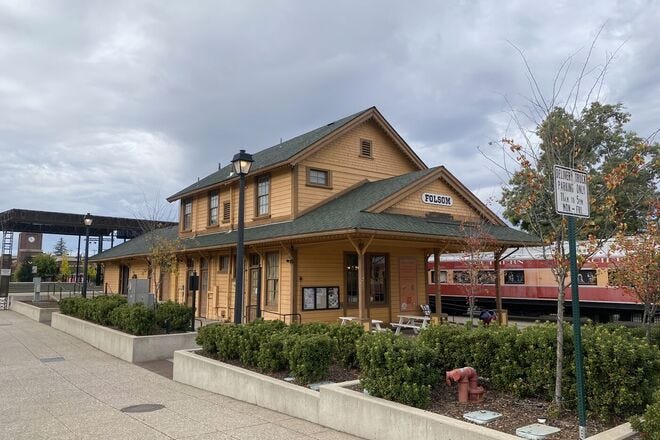
Ten miles from Rancho Cordova, the Folsom Historic District bursts with gold rush-era architecture in upscale boutiques, eateries, coffee shops, inns, and museums. The town square offers a slice of California Gold Country with a historic train depot, turntable, and seasonal activities like gold panning and blacksmithing.
Folsom was founded in 1849 but didn’t become a household name until 1955 when Johnny Cash released his single, “Folsom Prison Blues.” The singer later recorded two shows and a live album here, cementing its status as one of the most famous penitentiaries in the world. Folsom still operates as a prison, and you can hike or bike past its walls on the wheel-chair accessible Johnny Cash Trail.
Where to stay in Folsom: Bradley House, a bed and breakfast in the middle of Folsom’s historic district, is within walking distance to shops, restaurants, and The Square.
Placerville
Twenty-five miles away from the Folsom Historic District, Placerville blossomed from a mining camp to California’s third-most populous city during the gold rush.
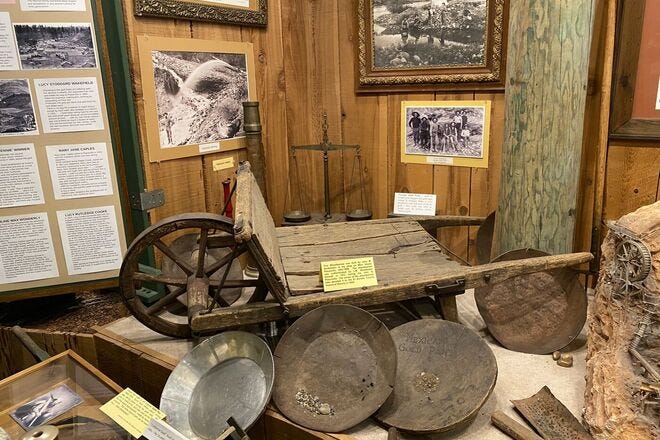
Today, Placerville is one of the best-preserved Gold Country towns in California. You can easily spend a day admiring the architecture and popping into museums, restaurants, and eclectic shops. Don’t miss the El Dorado County Historical Museum, which features artifacts and life-sized displays to showcase the area’s history.
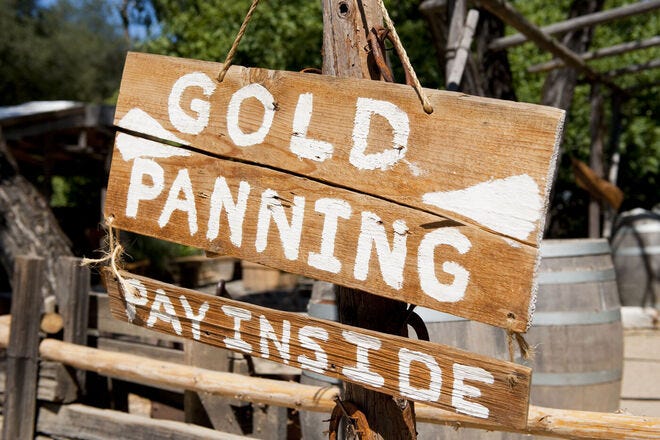
The Gold Bug Park and Mine carries visitors on a journey back in time with a mining museum, blacksmithing demonstrations, gold panning, and a mine tour.
When it’s time for lunch, stop by The Original Mels Diner, part of the nostalgic restaurant chain featured in movies like “American Graffiti” and the television series “Alice.” After, head to Apple Hill, where you’ll find lovely pastoral views and a collection of farms, orchards, and wineries.
Where to stay in Placerville: The gold rush-era Historic Cary House Hotel offers reasonably priced rooms within walking distance of museums, restaurants, and old-time saloons.
Coloma
When you leave Placerville, drive 10 miles via Highway 49 to Marshall Gold Discovery State Historic Park in Coloma. That’s where the California gold rush ignited in 1848. At its peak, 10,000 people called this area home; today, Coloma only has about 200 year-round residents. Historic buildings include two churches, a tiny post office, a schoolhouse, and a blacksmith shop. There are also several replica buildings, including a sawmill and a cabin.
The Marshall Gold Discovery State Historic Park museum tells stories of the California gold rush through interactive exhibits, artifacts, and live events. Guided walking tours, gold-panning lessons, and a junior ranger program are among the most popular programs in the park.
Where to stay in Coloma: Coloma Resort offers accommodations for nearly every type of traveler. Guests can choose between campsites, cabins, or glamping options in tent or wagon villages.
South Lake Tahoe

End your California Gold Country road trip in South Lake Tahoe, about 70 miles from Coloma. The area exploded with commerce during the gold rush due to its prime location between the Comstock Lode in Virginia City and the Central Pacific Railroad near Truckee.
By the time the gold rush waned, many fortunes were made, and wealthy families began summering in Lake Tahoe. You can get a glimpse of what their lives were like at the Tallac Historic Site, a 74-acre lakefront property with three historic estates and the ruins of what was once advertised as “The Grandest Resort In The World.”
From May through October, a free museum, special events, and tours of one of the residences are available. The property is free, open to the public year-round, and connects to beaches and hiking trails.
Where to stay in South Lake Tahoe: The century-old Camp Richardson Resort offers traditional hotel rooms, cabins, and campsites within a mile of the Tallac Historic Site.
About Tamara Gane
Tamara Gane is an expert panel member for 10Best Readers’ Choice Awards. She’s based in Reno/Lake Tahoe and in addition to USA Today 10Best, her work has been published in Travel & Leisure, Fodor’s Travel, The Washington Post, SF Gate, Houston Chronicle, Lonely Planet, and more.
Read more about Tamara Gane here.
Connect with Tamara via: Instagram